SCOTCAT.COM
your internet guide to all things catfish
Tatia dunni (Fowler, 1945) |
Image contributors to this species: |
Yann Fulliquet (6) GREEN FISH Aquarium (2) |
ScotCat Sources: |
|
|


Other Sources: |
|


Relevant Information: |
Description: Dorsal spines (total): 1; Dorsal soft rays (total): 4 - 5; Anal soft rays: 9 - 10; Vertebrae: 35. Can be diagnosed by the unique combination of characters: nasal ossified with narrow medial flanges partially sutured to lateral margin of mesethmoid; anal fin rays iii, 6-7; modified anal fin with short tip in mature males; first unbranched anal-fin ray with segments fused, last branched ray normally developed, not reduced; ribs 10; and vertebrae 35. Colouration: Differs further by the following colouration details: contour of mouth dark, same colour as head; posterior border of nuchal shield usually dark; pectoral-fin spine usually dark brown; body with irregular blotches or stripes; presence of faint stripes or blotches in large specimens ; and caudal fin dark with whitish blotches. Some T. dunni, from the Peruvian Amazon, have a dark brown body and mottled anal fin (INHS 43890). Large specimens from the Purus river, in central Amazonia, usually have a completely dark body (INPA 17182) or a lightly spotted colouration (INPA 17184). Distinguished from Tatia intermedia by having preanal length 70.0-75.0% SL, vs. 65.0-69.4% SL and interorbital distance 54.1-59.4% HL, vs. 60.1-63.6 HL. A iii,6-7; V i5. Post-Weberian vertebrae. Aquarium Care: As with per this genera, give them small pipes, and they also seem to like to hide in the crevices of bogwood as well. They appear to be happier if they can jam themselves in with the use of their pectoral fins. Community tanks are fine for this species although you may find that they will predate on fry from other species, but apart from that they come well recommended but don't expect to see them too often. Diet: In its native habitat they feed on small invertebrates and crustaceans and in the aquarium they will eat anything given such as frozen bloodworm inserted in to their hideaway, catfish tablets, white worm (sparingly) and prawns and shrimp. They do like their food and you can see them shooting out of their hideouts and swimming in a frenzied manner to try and take all for themselves, especially when you feed them their favourite food, frozen bloodworm. Etymology: dunni: In honour of Emmett Reid Dunn (1894-1956), “in appreciation of his studies on Colombian herpetology”. Remarks: The species is widely distributed and faces no direct threats. Therefore, it is assessed as Least Concern (IUCN 2020). |
Common Name: |
None |
Synonyms: |
Centromochlus dunni |
Family: |
Auchenipteridae |
Distribution: |
South America: Upper Amazon in Ecuador and Colombia; central Amazon in Brazil; Caquetá River drainage in Colombia. Type locality: Morelia, Río Caquetá drainage, Colombia. |
Size: |
12.0cm (4¾ins) |
Temp: |
22-26°c (71-79°f.) |
p.H. |
|
6.5-7.5. |
Reference: |
Frederico, R.G. 2023.
Tatia dunni. The IUCN Red List of Threatened Species
2023. |

Family: Auchenipteridae Back to Ident-A-Cat Click on Thumbnails |
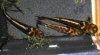 Tatia
dunni Tatia
dunni Dorsal view |
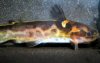 Tatia
dunni Tatia
dunni |
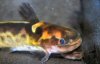 Tatia
dunni Tatia
dunni Head view |
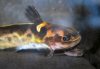 Tatia
dunni Tatia
dunni |
 Tatia
dunni Tatia
dunni In aquarium |
 Tatia
dunni Tatia
dunni In aquarium |
 Tatia
dunni Tatia
dunni |
 Tatia
dunni Tatia
dunni |
If you would like to contribute to the monthly factsheets with an article, information or photos, please e-mail me. You will of course be credited for your work.

If you would like to donate any denomination of monies to the site just click the above link button. All proceeds will go to running the site and hopefully to keep it going for a few years yet.

