SCOTCAT.COM
your internet guide to all things catfish
Trachycorystes menezesi Britski & Akama, 2011 |
Image contributors to this species: |
Leandro Sousa (1) |
ScotCat Sources: |
|
|

Other Sources: |
|


Relevant Information: |
Description: Dorsal spines (total): 1; Dorsal soft rays (total): 6; Anal soft rays: 19 - 22; Vertebrae: 41. Diagnosed from Trachycorystes trachycorystes by having the following characters: jaws equal in length (vs. lower jaw longer, prognathous in Trachycorystes trachycorystes); skull roof covered by thick integument concealing bony sculptures (vs. skull roof covered by thin integument, bony sculptures visible); inner mental barbel thin and very short, not reaching base of outer mental barbel (vs. inner mental barbel thicker, extending to or beyond base of outer mental barbel); dorsal-fin spine serrated only along posterior margin (vs. dorsal-fin spine serrated only along anterior margin); caudal fin weakly forked (vs. emarginate); gas bladder simple, without diverticula (vs. gas bladder with three posterior diverticula, one medial and paired posterolateral). Habitat: Found in abundance in tributaries of the Rio Aripuanã, such as igarapé do Aeroporto and igarapé Genipapo, clear water creeks two or three m wide and up to 0.6 m deep, with forested margins and sandy bottoms where fallen trunks, branches and vegetal detritus were abundant. Collected using deep nets and by displacing the submerged debris, the natural hiding-places of the species. Aquarium Care: Not to be trusted when growing into adulthood as it will quickly kill any smaller inhabitants of the tank. May be able to keep with large Cichlids but basically a fish to keep on its own. Sexual Differences: Adult males possess a thickening of their anal fins akin to the anal fins of the males of the Goodiae family of livebearers. The females genital pore is enlarged and recessed into her abdomen. Diet: A predator but will accept worm foods, frozen shrimp and bloodworm, chunks of frozen fish, tablet and pellet foods. In the wild it will feed on fish, various insects as well as scorpion and crustaceans. Etymology: The genus name Trachycorystes: tautonymous with Auchenipterus trachycorystes, trachys, rough; corystes, helmeted, referring to rugose cranial shield. The specific name, menezesi, is in honour of Dr. Rui Simões de Menezes, Universidade Federal do Ceará, Brazil, in recognition to his studies of the life history of freshwater fishes of northeastern Brazil. |
Common Name: |
None |
Synonyms: |
Auchenipterus trachycorystes, Trachycorystes typus |
Family: |
Auchenipteridae |
Distribution: |
South America: Rio Aripuanã drainage, Mato Grosso State, Brazil. |
Size: |
20.0cm. (8ins) |
Temp: |
23-27°c (73-81°f.) |
p.H. |
|
6.5-7.0. |
IUCN Red List |
Trachycorystes menezesi is endemic to Brazil, described for the Aripuanã basin and tributaries above the Dardanelos and Andorinha waterfalls, Madeira River drainage (Mato Grosso state). The species has a restricted geographic distribution and is frequent where it occurs. Despite the existence of hydroelectric projects in the region, Trachycorystes menezesi remains abundant and has not suffered impacts. For this reason , T. menezesi was categorised as Least Concern (LC), (IUCN 2022). |
Reference: |
Britski, H.A. and A.
Akama, 2011. New species of Trachycorystes
Bleeker, with comments on other species of the genus
(Ostariophysi: Siluriformes: Auchenipteridae). Neotrop.
Ichthyol. 9(2):273-279. |

Family: Auchenipteridae Back to Ident-A-Cat Click on Thumbnails |
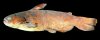 Trachycorystes
menezesi Trachycorystes
menezesiHolotype-Igarapé do Aeroporto, right bank tributary of rio Aripuanã, Mato Grosso State, Brazil |
If you would like to contribute to the monthly factsheets with an article, information or photos, please e-mail me. You will of course be credited for your work.

If you would like to donate any denomination of monies to the site just click the above link button. All proceeds will go to running the site and hopefully to keep it going for a few years yet.

