SCOTCAT.COM
your internet guide to all things catfish
Bagrus meridionalis Günther, 1894 |
Image contributors to this species: |
Michael K. Oliver (1) Carsten K. Larsen (2) Markus Kaluza (2) |
ScotCat Sources: |
|


Other Sources: |
|
|


Relevant Information: |
Habitat: Occurs from the lower reaches of rivers to the deepest habitable parts of the lake and inhabits a variety of habitats. Diet: Feeds on small demersal cichlids during the night. Juveniles mainly feed on trophic eggs released by the female, whilst the male helps the young in searching for invertebrates in and around the nest. Mutualistic relationship with cichlids concerning defense and feeding of young of both the cichlid and B. meridionalis. Symbiotic relationship of parasitised host-parasite eater exist with Pseudotropheus crabro, which eats away necrotic tissue and parasites, but also steals eggs. Oviparous. Can produce sound as Amia or Synodontis species. Considered as a delicacy when smoked, making it one of the most highly priced fishes of Malawi. Aquarium Care: Not a fish for your community tank as it will eat anything that it can fit into its mouth. You can of course keep it as a juvenile in a Rift Valley set-up containing cichlids from the lake as long as the occupants are larger than the catfish. When it gets to an adult size it would do better on its own in a very large tank but realistically it is a fish for the public aquarium when it gets to that size. Etymology: The genus name Bagrus: latinisation of bagre, which, according to Marcgrave (1648), is a Portuguese word for catfish used in Brazil (possibly first applied to the marine ariid Bagre bagre). The specific name meridionalis: southern, presumably referring to the distribution south of the nilotic B. bajad in the upper Shire River of Malawi. Remarks: The picture taken underwater (3rd thumbnail image) is taken at Mumbo Island in the national park (Cape maclear) from a trip undertaken by Carsten Larsen in 2001. Aproximate depth at time is 11 metres and the water was really cloudy. The size of the fish is around 75- 85cm. so not fully grown. |
Common Name: |
Kampango |
Synonyms: |
Porcus meridionalis |
Family: |
Bagridae |
Distribution: |
Africa: Shire River and Lake Malawi. Type locality: Upper Shire River (British Central Africa). |
Size: |
150.0cm (5ft) |
Temp: |
24-27°C (75-81°F) |
p.H. |
|
7.5-8.2. |
Reference: |
Froese, R. and D. Pauly.
Editors. 2009. FishBase. World Wide Web electronic
publication. www.fishbase.org, version (11/2009).
|

Family: Bagridae Back to Ident-A-Cat Click on Thumbnails |
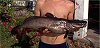 Bagrus
meridionalis Bagrus
meridionalis Adult |
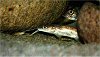 Bagrus
meridionalis Bagrus
meridionalis 15.0cm. Juvenile |
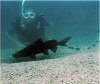 Bagrus
meridionalis Bagrus
meridionalis Mumbo Island in the national park (Cape maclear) |
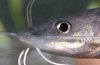 Bagrus
meridionalis Bagrus
meridionalis Juvenile-head view |
 Bagrus
meridionalis Bagrus
meridionalis Juvenile |
If you would like to contribute to the monthly factsheets with an article, information or photos, please e-mail me. You will of course be credited for your work.

If you would like to donate any denomination of monies to the site just click the above link button. All proceeds will go to running the site and hopefully to keep it going for a few years yet.

