SCOTCAT.COM
your internet guide to all things catfish
Brochis robineae (Burgess, 1983) |
Image contributors to this species: |
|
Danny Blundell (1) Allan James (2) Julian Dignall (1) Chris Ralph (3) K. Meier (1) Mark Goh (1) Alan Pinkerton (1) Joakim Schön (1) |
ScotCat Sources: |
|


Other Sources: |
|


Relevant Information: |
Easy species to identify due to the unique pattern in the caudal fin which it also shares with Dianema urostriatum from the Callichthyinae sub family. Not an easy species of Brochis to breed, but it has been achieved. (see ScotCat article in Reference). Lineage: Placed in Lineage 8 sub clade 4 which comprises the "intermediate long-snouts" with deeper bodies. It also includes Brochis in sub-clade 1 which was synonymised with Corydoras by Britto in 2003 but in time there will be a revision which will resurrect Brochis (Cope, 1871) to full genera again. As of the latest revision (Dias et al 2024) Corydoras robineae has now been placed in Lineage 8 sub clade 4 and has the new genus name of Brochis. Aquarium Care: This is akin to most of this genus, very peaceful, and would be best housed with small to medium tank mates such as Tetras, Rasboras and Danios or in a species tank for breeding purposes. Diet: A good quality flake food and tablet food for adults with sporadic feedings of frozen or live food will keep your Corydoras in good health. Etymology: The specific name robineae: Named in honour of Mrs Robina Schwartz. Remarks: Still found on some online sources as Corydoras robineae. |
Common Name: |
Flag-tailed Cory |
Synonyms: |
Corydoras robineae |
Family: |
Callichthyidae |
Distribution: |
South America: Brazil, Upper Negro River basin. Type locality: Rio Aiuana, a southern tributary of the middle Rio Negro, Amazonas, Brazil. |
Size: |
Male: 6.5cm (2¾ins) Female: 7.0cm (3ins) |
Temp: |
22-26°C (71-79°F) |
p.H. |
|
6.0-7.2. |
IUCN Red List |
Corydoras (Brochis) robineae is endemic to Brazil and known from the Rio Negro basin. It has records from the Aiuanã and Tiquié rivers, in the upper Rio Negro. Although collection for commercial purposes is authorised, this threat does not appear to jeopardise the species' survival in the wild. Although population information is scarce, the region is in good conservation status and no significant threats have been identified. Therefore, B. robinae has been categorised as Least Concern (LC), (IUCN 2022). |
Reference: |
Alexandrou, Markos
& Taylor, Martin. (2011). Evolution,
ecology and taxonomy of the Corydoradinae revisited. |

Family: Callichthyidae Back to Ident-A-Cat Click on Thumbnails |
 Brochis
robineae |
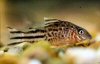 Brochis
robineae |
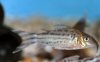 Brochis
robineae |
 Brochis
robineae |
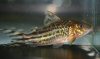 Brochis
robineae |
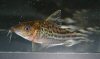 Brochis
robineae |
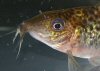 Brochis
robineae Head view |
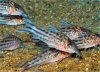
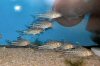 Brochis
robineae Group |
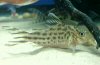 Brochis
robineae |
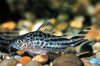 Brochis
robineae |
 Brochis
robineae |
If you would like to contribute to the monthly factsheets with an article, information or photos, please e-mail me. You will of course be credited for your work.

If you would like to donate any denomination of monies to the site just click the above link button. All proceeds will go to running the site and hopefully to keep it going for a few years yet.

