SCOTCAT.COM
your internet guide to all things catfish
Hoplisoma griseum (Holly, 1940) |
Image contributors to this species: |
Ian Fuller (2) CP Aqua Studio (2) Eun Sang Song (2) |
ScotCat Sources: |
|

Other Sources: |
|


Relevant Information: |
There are three similar looking species. Hoplisoma sp. (C134) from Est. Amapá, Río Oiapoque in Brazil, Hoplisoma sp. (C040) from Rondônia, Brazil and Hoplisoma sp. (C073) also from Rondônia, Brazil. Lineage: Placed in Lineage 9, the "short-snouted" species with the designated type species: C. punctatus. A revision in the future would constitute the resurrection of the genus name Hoplisoma (Agassiz, 1846). As of the latest revision (Dias et al 2024), Corydoras griseus has now been placed in Lineage 9 and has the new genus name of Hoplisoma and a change to the specific name to griseum. Aquarium Care: This is akin to most of this genus, very peaceful, and would be best housed with small to medium sized tankmates such as Tetras, Rasboras and Danios or in a species tank for breeding purposes. Best to purchase 6 individuals or more as they will be happier in a group. Diet: Readily accepts a mixed and varied diet which includes granular foods, tablet food, frozen bloodworm and a good quality flake. Etymology: The specific name griseum: Medieval Latin for grey, referring to its uniform greyish colour pattern. Remarks: This species is still found on some online sources as Corydoras griseus. |
Common Name: |
Synonyms: |
Corydoras griseus |
Family: |
Callichthyidae |
Distribution: |
South America: Guyana; Essequibo, Potaro River, Kuribong trail. |
Size: |
Male: 4.5cm (1¾ins) Female: 5.0cm (2ins) |
Temp: |
22-26°C (71-79°F) |
p.H. |
|
6.0-7.2. |
IUCN Red List |
This species occurs in the Kuribrong River below the Amaila falls. It has an extent of occurrence (EOO) with a best estimate of 1,108 km2. Gold mining is the major threat and the impacts caused by gold mining in the Kuribrong River are predicted to increase since a new road reaching the river banks was built in 2011. There are two locations based on this threat, and it is inferred to be causing a continuing decline in the extent and quality of habitat. A large dam is projected to built above the Amaila falls, although plans for its construction have been postponed. Once built, it will regulated the flow of the middle and lower sections of the Kuribrong River and potentially pose an additional impact on the populations of Corydoras griseus (= Hoplisoma griseum). Therefore, this species is assessed as Endangered (IUCN 2023). |
Reference: |
Alexandrou,
Markos & Taylor, Martin. (2011). Evolution,
ecology and taxonomy of the Corydoradinae revisited. |

Family: Callichthyidae Back to Ident-A-Cat Click on Thumbnails |
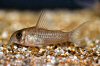 Hoplisoma
griseum Hoplisoma
griseum |
 Hoplisoma
griseum Hoplisoma
griseumPair-male on right |
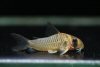 Hoplisoma
griseum Hoplisoma
griseum |
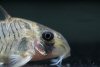 Hoplisoma
griseum Hoplisoma
griseumHead view |
 Hoplisoma
griseum Hoplisoma
griseum |
 Hoplisoma
griseum Hoplisoma
griseum |
If you would like to contribute to the monthly factsheets with an article, information or photos, please e-mail me. You will of course be credited for your work.

If you would like to donate any denomination of monies to the site just click the above link button. All proceeds will go to running the site and hopefully to keep it going for a few years yet.

