SCOTCAT.COM
your internet guide to all things catfish
Cetopsis coecutiens (Lichtenstein, 1819) |
Image contributors to this species: |
Chris Ralph (4) Ian Fuller (1) Daniel Blom (3) Peru Aquarium Group (1) Mark Henry Sabaj (2) |
ScotCat Sources: |
|
|


Other Sources: |
|


Relevant Information: |
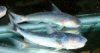
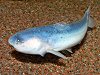
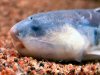
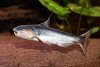
Description: Can be distinguished from all of its congeners by the combination of the presence of an eye, the conical teeth on the vomer and dentary, a body depth greater than 0.22 of SL, the elongated filaments on the distal portions of the first rays of the dorsal and pectoral fins in all specimens, and the presence of transversely-aligned, slit-like posterior nares. Aquarium Care: I would suggest a minimum size of Aquaria to be 72” x 24” X 24” if you are going to keep these catfish until they attain adult size. There is no real preference of substrate when keeping these catfish however; I would suggest good quality aquarium sand such as BD Aquarium Sand, or very smooth rounded gravel. The aquarium should provide minimal shelter in the form of rocks or bogwood due to the fact that this catfish is constantly on the go, swimming in the midwater regions of the water body. As with all other species of fish, water quality and general husbandry is very important, and I would recommend that a minimum of 25% water is changed on a weekly basis due to the fact that these catfish are constantly looking for food and the diet is fish or meat based. Lighting should be dim, due to the poor eyesight of these catfish and the fact that they are found at relatively deep water levels in their natural habitat. Diet: Cetopsis coecutiens and C. candiru which achieve the largest body sizes within the Cetopsinae, are notorious for their voracious feeding habits; attacking not only carrion, but also live fishes in gill-nets (Barthem & Goulding, 1997: 44), and on occasion humans (Goulding, 1989: 185). The predatory and scavenging feeding habits of these species of Cetopsis perhaps contributed to the erroneous assumption that members of the Cetopsinae are “parasitic”; a conclusion that may have lead various previous researchers to align members of that subfamily with the species of the family Trichomycteridae, some members of which feed on the blood of their hosts. In contrast to the voracious feeding habits of Cetopsis candiru and C. coecutiens, all other members of the subfamily for which the diet is known prey primarily on allochthonous and aquatic insects. Etymology: The specific name coecutiens: Latin for being blind or seeing poorly, presumably referring to its eyes covered by skin. |
Common Name: |
Whale Cat |
Synonyms: |
Silurus coecutiens, Silurus caecutiens |
Family: |
Cetopsidae |
Distribution: |
South America: Amazon, Tocantins, and Orinoco River basins. Type locality: Brazil. |
Size: |
26.5cm. (10½ins) |
Temp: |
22-28°c (71-83°f ) |
p.H. |
|
6.0-7.4. |
IUCN Red List |
Despite there being little information available on this species, it has a wide range, and is not impacted by any known threats; therefore it is assessed as Least Concern. (IUCN 2023). |
Reference: |
ScotCat
Factsheet no. 124.
October 2006. |

Family: Cetopsidae Back to Ident-A-Cat Click on Thumbnails |
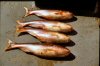 Cetopsis coecutiens
 |
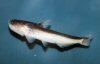 Cetopsis
coecutiens Cetopsis
coecutiens |
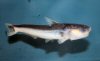 Cetopsis
coecutiens Cetopsis
coecutiens |
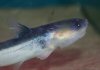 Cetopsis
coecutiens Cetopsis
coecutiensHead view |
 Cetopsis
coecutiens Cetopsis
coecutiens |
 Cetopsis
coecutiens Cetopsis
coecutiens |
 Cetopsis
coecutiens Cetopsis
coecutiensHead view |
 Cetopsis
coecutiens Cetopsis
coecutiens |
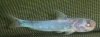 Cetopsis
coecutiens Cetopsis
coecutiens |
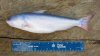 Cetopsis
coecutiens Cetopsis
coecutiens |
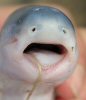 Cetopsis
coecutiens Cetopsis
coecutiensShowing teeth |
If you would like to contribute to the monthly factsheets with an article, information or photos, please e-mail me. You will of course be credited for your work.

If you would like to donate any denomination of monies to the site just click the above link button. All proceeds will go to running the site and hopefully to keep it going for a few years yet.

