SCOTCAT.COM
your internet guide to all things catfish
Ossancora fimbriata (Kner, 1855) |
Image contributors to this species: |
Mark Henry Sabaj (1) |
ScotCat Sources: |
|
|

Other Sources: |
|


Relevant Information: |
The younger name Doras fimbriatus Kner 1855 is considered valid as a nomen protectum according to Article 23.9 of the ICZN, and its older synonym, D. loricatus Kner 1853 qualifies as a nomen oblitum. A fourth new species, O. asterophys, is described and diagnosed in part by a gas bladder morphology that is distinctive among congeners. Description: Three species, O. eigenmanni, O. fimbriata and O. asterophysa, form a monophyletic group based on three shared characteristics: smooth elongate fimbriae inserted in more than one row, one dorsally and one ventrally, along anterior margin of maxillary barbel (uniquely derived among Doradidae), elongate fimbriae on mental barbels, and anterior nuchal plate reduced, not sutured to epioccipital (latter two features uniquely derived among Ossancora). Habitat: Ossancora is typical of lowland floodplain lakes and river channels, and its occurrence in the both the Amazonas and Paraná-Paraguay supports a historical link between these two basins. Aquarium Care: Very peaceful addition to a community aquarium. This is another doradid that prefers safety in numbers assuming that you can purchase them. Recommended that you keep at least 4 specimens together. Good water quality is required. Diet: Finely shredded shrimp and bloodworm. Etymology: The specific name fimbriata: Latin for fringed, probably referring to fimbriae present on maxillary and mental barbels (may also refer to many diverticula on swim bladder). |
Common Name: |
Synonyms: |
Doras fimbriatus, Doras loricatus |
Family: |
Doradidae |
Distribution: |
South America: Guaporé River basin. |
Size: |
9.0cm. (3½ins) |
Temp: |
22-25°C (71-77°F) |
p.H. |
|
6.0-7.0. |
Reference: |
Birindelli, JLO and
MH Sabaj Pérez (2011)
Ossancora, new genus of thorny catfish (Teleostei:
Siluriformes: Doradidae) with description of one new
species. Proceedings of the Academy of Natural Sciences
of Philadelphia 161, pp. 117–152. |

Family: Doradidae Back to Ident-A-Cat Click on Thumbnails |
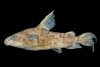 Ossancora
fimbriata
Ossancora
fimbriata |
If you would like to contribute to the monthly factsheets with an article, information or photos, please e-mail me. You will of course be credited for your work.

If you would like to donate any denomination of monies to the site just click the above link button. All proceeds will go to running the site and hopefully to keep it going for a few years yet.

