SCOTCAT.COM
your internet guide to all things catfish
Trogloglanis pattersoni Eigenmann, 1919 |
Image contributors to this species: |
ScotCat Sources: |
|
|


Other Sources: |
|


Relevant Information: |
Habitat: Occurs in subterranean waters and is threatened by groundwater pollution. Cited in the IUCN Red List Status of 2011 as vulnerable. Below the city of San Antonio Texas lies a vast aquifer known as the Edwards (Balcones Fault Zone) Aquifer. Two rare and unusual catfish reside in the aquifer, Satan eurystomus, the widemouth blindcat and Trogloglanis pattersoni, the toothless blindcat. They are the only known troglobitic catfish in the United States. The only specimens of both species ever collected have come from deep (1,200' to 1,500') artesian wells within the city of San Antonio itself and parts of southern Bexar County. The Balcones Fault Zone is a complex system of limestone strata (Edwards Limestone Formation) that has been fractured and eroded over time by geological forces. Water travels not only through numerous cracks and fissures but also through massive underground caverns, streams and rivers. The limestone strata slopes towards the Gulf of Mexico. In northern Bexar County the limestone formation is exposed on the surface. In the southern part of the county the formation is 3,000 feet underground. San Antonio's water supply comes from an area of the aquifer known as San Antonio Pool and is considered the "Good Water" zone. South of the Balcones Fault Zone lies the Gulf Coastal Plain which contains anaerobic, saline and sulfurous groundwater known as the "Bad Water" zone. Water from both zones meet and mix in a line that roughly parallels Interstate Highway 35. Blindcats reside along this narrow mixing zone and may be dependant on the unique environment created at the mixing point of these two zones. Etymology: The genus name Trogloglanis:Greek, trogle = hole + Greek, glanis a fish that can eat the bait without touching the hook; a cat fish. The specific name pattersoni: In honour of John Thomas “Pat” Patterson (1878–1960), embryologist and geneticist, University of Texas, who sent holotype to Eigenmann. |
Common Name: |
Toothless blindcat |
Synonyms: |
None |
Family: |
Ictaluridae |
Distribution: |
North America: 5 artesian wells penetrating San Antonio Pool of Edwards Aquifer in and near San Antonio, Bexar County, Texas in the USA (29°30'N,98°30'W). |
Size: |
10cm. (4ins) |
Temp: |
- |
p.H. |
|
- |
IUCN Red List |
Listed as Vulnerable because the species is represented by only one or a few locations. Trend is unknown. The species is vulnerable to groundwater depletion (needs updating IUCN 2013). |
Reference: |
Froese, R. and D. Pauly.
Editors. 2009. FishBase. World Wide Web electronic
publication. www.fishbase.org, version (05/2012). |

Family: Ictaluridae Back to Ident-A-Cat Click on Thumbnails |
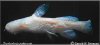 Trogloglanis pattersoni
 |
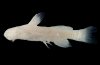 Trogloglanis
pattersoni Trogloglanis
pattersoni |
If you would like to contribute to the monthly factsheets with an article, information or photos, please e-mail me. You will of course be credited for your work.

If you would like to donate any denomination of monies to the site just click the above link button. All proceeds will go to running the site and hopefully to keep it going for a few years yet.

