SCOTCAT.COM
your internet guide to all things catfish
Acanthicus adonis Isbrücker & Njissen, 1988 |
Image contributors to this species: |
Danny Blundell (3) Peru Aquarium Group (1) clunk (2) Johnny Jensen's Photographic Library (2) Elko Kinlechner (3) |
ScotCat Sources: |
|

Other Sources: |
|
|


Relevant Information: |
Habitat: It was originally described from the lower Tocantins River in Brazil, but individuals resembling the species have also been recorded from Amazonian Peru. The species is occasionally seen in the aquarium trade, but its massive adult size and territorially aggressive behavior means that a very large tank is required. Colouration: Dark brown to black with numerous white spots as a juvenile. As the fish matures, the spots become less numerous and smaller, often disappearing entirely in large adults. Its close relative A. hystrix always lack white spots, regardless of age. In contrast, A. adonis lacks the vermiculated pattern often (but not always) found on the underparts of A. hystrix. Aquarium Care: One of the largest Loricariids known, so would need to be kept in exceptionally large aquariums. Intolerant of other large Loricariids. Diet: Omnivores and will require large amounts of vegetable foods, tablet and frozen foods such as shrimps and mussels. There are only two described species in this genera, this species and A. hystrix. Etymology: The specific name adonis: Handsome, after Adonis, beloved of Venus. Remarks: There are two variants commonly considered as separate, undescribed species in the aquarium trade (e.g., L193 from the Orinoco basin and L407 from the Branco basin), but there is extensive overlap in the morphometrics of the different populations. |
Common Name: |
Polka Dot Lyre Tail Pleco |
Synonyms: |
None |
Family: |
Loricariidae |
Distribution: |
Brazil: Pará, Rio Tocantins (Cametá). Type locality: Brasilien, Est. Pará, Rio Tocantins bei Cametá (0º14'S, 49º30.5'W). |
Size: |
100.0cm. (39ins) |
Temp: |
25-29°c (77-85°f.) |
p.H. |
|
6.0-7.5. |
IUCN Red List |
Despite the little information available on this species, it has a wide range and no apparent threats. Therefore, it is assessed as Least Concern (IUCN 2023). |
Reference: |
|
Chamon, C.C.
(2016): Redescription of Acanthicus hystrix Agassiz,
1829 (Siluriformes: Loricariidae), with comments on
the systematics and distribution of the genus. Zootaxa,
4088 (3): 395–408. |

Family: Loricariidae Back to Ident-A-Cat Click on Thumbnails |
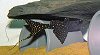 Acanthicus
adonis Acanthicus
adonisSub-Adult |
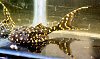 Acanthicus
adonis Acanthicus
adonis Juvenile |
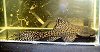 Acanthicus
adonis Acanthicus
adonisAdult |
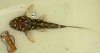 Acanthicus
adonis Acanthicus
adonis Juvenile |
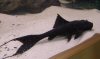 Acanthicus
adonis Acanthicus
adonis |
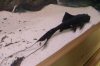 Acanthicus
adonis Acanthicus
adonis |
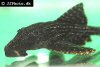 Acanthicus
adonis Acanthicus
adonis |
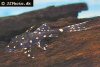 Acanthicus
adonis Acanthicus
adonis Juvenile |
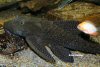 Acanthicus
adonis Acanthicus
adonis |
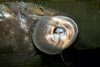 Acanthicus
adonis Acanthicus
adonis Mouth view |
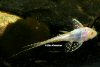 Acanthicus
adonis Acanthicus
adonis Albino |
If you would like to contribute to the monthly factsheets with an article, information or photos, please e-mail me. You will of course be credited for your work.

If you would like to donate any denomination of monies to the site just click the above link button. All proceeds will go to running the site and hopefully to keep it going for a few years yet

