SCOTCAT.COM
your internet guide to all things catfish
Harttia guianensis Rapp Py-Daniel & Olvieira, 2001 |
Image contributors to this species: |
|
Mark Henry Sabaj (1) Yann Fulliquet (3) Karsten Schönherr (1) Drake Shaw (1) |
ScotCat Sources: |
|


Other Sources: |
|


Relevant Information: |
Description: Head and predorsal uniformly dark brown in larger individuals and marbled in young. Head depth, 2.3-3.3 times in SL; body depth 1.9-3.2 times in SL. Belly totally naked except for thoracic plates and a group of small irregular plates concentrated on the anus, just posterior to pelvic-fin insertion. Rictal barbels small, attached to lower lip by small membrane. Stomach indistinguishable; intestine very long, about 14 times in SL. Keeled lateral plates, 29-30. Colouration: Caudal fin with two small dark black blotches at tip of upper lobe and only one on tip of lower lobe; point of confluence of the lateral keels at 20-22nd. Dorsal fin with large black spot on its distal end. Other fins spotted except the anal fin. Aquarium Care: Not the easiest genera to keep as they will need clean, oxygen rich water and a strong current. Does not do well in imports due to its difficulty in traveling containers. Sexual Differences: Males tend to have odontodes (hair like structures) on the first ray of the pectoral fins and the head in males is broader. Diet: Dry foods, algae wafers, Spirulina and normal tablet foods. Frozen foods, Artemia nauplii, glass worms and Daphnia. Etymology: The specific name guianensis: –ensis, Latin suffix denoting place: French Guiana, where it is endemic. |
Common Name: |
Synonyms: |
None |
Family: |
Loricariidae |
Distribution: |
South America: Sinnamary and Approuague River basins. Type Locality: Approuague River, Saut Athanase, 4°11'N, 52°19'W, French Guiana. |
Size: |
17.5cm. (6¾ins) |
Temp: |
25-30°c (75-87°f.) |
p.H. |
|
6.0-7.0. |
IUCN Red List |
Although precise estimates of the current population sizes of Harttia guianensis are not known, based on the spatial and temporal quantification of the records in the bibliographic review, and of collections, it is considered that its population abundance is low in most of its area of distribution, although it can be highly abundant in well-preserved habitat. And although the species' range may be impacted by mining activities, the species occupies a moderately large distribution across Suriname and French Guiana. As such, it is currently assessed as Least Concern (LC), (IUCN 2023). |
Reference: |
Froese,
R. and D. Pauly. Editors. 2015. FishBase. World
Wide Web electronic publication. www.fishbase.org, (
10/2015 ). |

Family: Loricariidae Back to Ident-A-Cat Click on Thumbnails |
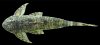 Harttia
guianensis Harttia
guianensis |
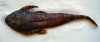 Harttia
guianensis Harttia
guianensisDorsal view |
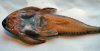 Harttia
guianensis Harttia
guianensisVentral view |
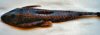 Harttia
guianensis Harttia
guianensisDorsal view |
 Harttia
guianensis Harttia
guianensis |
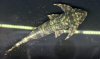 Harttia
guianensis Harttia
guianensisDorsal view |
 Harttia
guianensis Harttia
guianensis |
If you would like to contribute to the monthly factsheets with an article, information or photos, please e-mail me. You will of course be credited for your work.

If you would like to donate any denomination of monies to the site just click the above link button. All proceeds will go to running the site and hopefully to keep it going for a few years yet.

