SCOTCAT.COM
your internet guide to all things catfish
Harttia punctata Rapp Py-Daniel & Oliveira, 2001 |
Image contributors to this species: |
|
Mitsuhiro Iwamoto (3) Kiruya Momochi (2) |
ScotCat Sources: |
|

Other Sources: |
|


Relevant Information: |
Description: The genus Harttia belongs to the subfamily Loricariinae and has to date 27 described species, distributed in the drainages of Guiana Shield, Amazon and southeastern Brazil. Harttia punctata has the head short and relatively deep, 2 - 2.6 times its HL; short body. Spotted colour pattern associated to abdominal scutation, a longitudinal row of irregular plates. Pectoral spine with a dermal, non-filamentous extension. Lateral plates, 27-29. Confluence of lateral keels at 18-19th plate. Rictal barbel short and inconspicuous. Triangular shaped opercle. Habitat: Collected from the upper and middle courses of the Rio Tocantins. Aquarium Care: Not the easiest genera to keep as they will need clean, oxygen rich water and a strong current. They will also need reduced temperatures in the aquarium due to their southern habitats. Does not do well in imports due to its difficulty in traveling containers. Sexual Differences: Males tend to have odontodes (hair like structures) on the first ray of the pectoral fins and the head in males is broader. Diet: Grazes on microscopic algae, mostly diatoms and green algae growing on rugged and light-coloured rocks, and submersed vegetation. Chironomid and simuliid larvae, as well as tiny crustaceans, are recorded in its diet. When scraping algae off the substrate, the fish makes vigorous mouth movements and jerky movements, probably related to its mouth making alternate grazing and attaching to the substrate. In the aquarium feed dry foods, algae wafers, Spirulina and normal tablet foods. Frozen foods, Artemia nauplii, glass worms and Daphnia. Etymology: The genus name Harttia: –ia, belonging to: Charles Frederick Hartt (1840-1878), geologist, paleontologist and naturalist, who collect many specimens that Steindachner studied during the Thayer Expedition (1865-1866) to Brazil. The specific name name punctata from the Latin punctatus = 'spotted'. |
Common Name: |
Synonyms: |
None |
Family: |
Loricariidae |
Distribution: |
South America: Upper and middle Tocantins River basin, Brazil. Type locality: Brazil: Pará: Rio Tocantins, on rocks just below the Tucurui dam (49º38'10"W, 3º49'43"S). |
Size: |
16.5cm. (6½ins) |
Temp: |
18-22°c (63-71°f.) |
p.H. |
|
6.0-7.5. |
IUCN Red List |
Harttia punctata is endemic to Brazil, specifically the Tocantins/Araguaia river basin, occurring in medium to large streams and rivers in rapids with rocky slab bottoms. Although the construction of planned hydroelectric dams will alter part of its natural environment, a possible population decline is suspected not to pose a threat to the species due to its wide distribution in the basin. For this reason, Harttia punctata has been categorised as Least Concern (LC), (IUCN 2022). |
Reference: |
Ferraris,
C.J. Jr., 2007. Checklist of catfishes, recent
and fossil (Osteichthyes: Siluriformes), and catalogue
of siluriform primary types. Zootaxa 1418:1-628. |

Family: Loricariidae Back to Ident-A-Cat Click on Thumbnails |
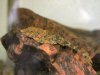 Harttia
punctata Harttia
punctata |
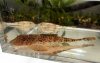 Harttia
punctata Harttia
punctata |
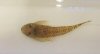 Harttia
punctata Harttia
punctataDorsal view |
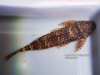 Harttia
punctata Harttia
punctataDorsal view |
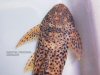 Harttia
punctata Harttia
punctataDorsal head view |
If you would like to contribute to the monthly factsheets with an article, information or photos, please e-mail me. You will of course be credited for your work.

If you would like to donate any denomination of monies to the site just click the above link button. All proceeds will go to running the site and hopefully to keep it going for a few years yet.

