SCOTCAT.COM
your internet guide to all things catfish
Hypostomus khimaera Tencatt, Zawadzki & Froehlich, 2014 |
Image contributors to this species: |
ScotCat Sources: |
|

Other Sources: |
|
|


Relevant Information: |
Description: Dorsal spines (total): 2; Dorsal soft rays (total): 7; Anal soft rays: 5. Hypostomus khimaera can be diagnosed from all congeners, except those belonging to the H. cochliodon group, by having the following unique combination of characters: absence of notch between metapterygoid and hyomandibula (vs. presence of notch); and strongly angled dentaries, less than 80° (vs. shallow angle between dentaries, generally more than 80°). It differs from all members of the H. cochliodon group, except from H. basilisko and H. soniae, by the presence of a dark tan stripe along the flank (vs. absence). It can be distinguished from H. basilisko and H. soniae by having black spots on the body and fins or at least in one of these (vs. absence of spots). In addition, it can be further separated from H. basilisko by having moderately developed keels (vs. highly developed keels) and 28 vertebrae (vs. 27); and from H. cochliodon by having 12-27 teeth (vs. 7-9), externalized opercle, exposed region easily visible (vs. almost entire internalized opercle, exposed region not easily visible; and 28 vertebrae. (Tencatt, L.F.C et al 2014). Habitat: Syntopic with Hypostomus cochliodon in several localities of the Rio Paraguay basin. Commonly found in small streams than in larger streams. Generally collected along the margins of deeper sites with sandy bottoms in the rio Aquidauana basin streams. Colouration: Although morphological and colour pattern differences have been found in different populations along the upper Rio Paraguai basin, all examined specimens are herein considered to belong to Hypostomus khimaera, a decision based on both morphologic and molecular analyses (Carvalho, V. de et al 2024). Aquarium Care: Will give out a lot of waste in the aquarium so frequent water changes are a must. Fairly easy to keep in a larger tank over 4ft (120cm). Diet: Wood eaters so would need soft wood in the aquarium. Food tablets, pellets and vegeatable foods are also taken along with insect larvae. Etymology: The specific name Khimaera: Derived from the Greek, cimaira or khímaira, a mythological creature with hybrid body, formed essentially by three animals, a lion, a snake and a goat. The specific name khimaera makes an allusion due to the new species possess features of conspicuously distinct species. A noun in apposition. |
Common Name: |
None |
Synonyms: |
None |
Family: |
Loricariidae |
Distribution: |
South America: Upper Paraguay River basin and upper Paraná River basin (Brazil). |
Size: |
16.5cm. (6½ins) |
Temp: |
20-27°c (67-81°f.) |
p.H. |
|
6.0-7.5. |
IUCN Red List |
Not Evaluated. |
Reference: |
Carvalho, V. de .,
Müller, V. J. da S., Ferreira, D. C., Zawadzki,
C. H., & Tencatt, L. F. C. (2024). Revisiting
Hypostomus khimaera (Siluriformes: Loricariidae):
the identity of a morphologically variable species.
Neotropical Ichthyology, 22(3), e240057. |

Family: Loricariidae Back to Ident-A-Cat Click on Thumbnails |
 Hypostomus
khimarea Hypostomus
khimareaRio Curupira, a tributary of the Rio Pari |
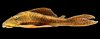 Hypostomus
khimaera Hypostomus
khimaeraRibeirão Pedro Gomes, Rio Piquiri basin |
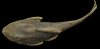 Hypostomus
khimaera Hypostomus
khimaeraDorsal view-holotype córrego Salobo, Rio Paraguai basin, Mato Grosso, Brazil |
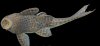 Hypostomus
khimaera Hypostomus
khimaeraVentral view-one of the colour pattern's of the ventral surface |
If you would like to contribute to the monthly factsheets with an article, information or photos, please e-mail me. You will of course be credited for your work.

If you would like to donate any denomination of monies to the site just click the above link button. All proceeds will go to running the site and hopefully to keep it going for a few years yet.

