SCOTCAT.COM
your internet guide to all things catfish
Lasiancistrus volcanensis Dahl, 1941 |
Image contributors to this species: |
Haakon Haagensen (2) |
ScotCat Sources: |
|

Other Sources: |
|


Relevant Information: |
Was given the L-number of 312 in the German DATZ magazine of March 2002 until described by José Luis Poveda-Cuellar et al in 2023. Colouration: Head and body with light brown base colour; head with darker mottling, wavy lines and reticulations; body flanks with darker transverse saddles and mottling. Abdomen uniformly light brown. All fins with darker brown bands. Adipose fin uniformly light brown. Similar looking to the larger species of L. caucanus from the Pacific rivers of Colombia. Habitat: Distributed across tributaries of the middle and upper Magdalena River basin and lower Cauca River basin in Colombia. These include Volcán Creek (type locality), La Tebaida Creek, Samaná River, Nare River, Guarinó River, Santo Domingo Creek, Gualanday Creek, Alvarado River, Cunday River and Suaza River. Sexual Differences: Males have longer pectoral fins and have a heavier growth of odontodes behind the gill covers and on the edges of the snout. Aquarium Care: Relatively easy to keep but large males may tend to be territorial. Reproduction: Breeding has proven to be quite achievable in captivity, and happens in typical manner with males guarding the clutch in a suitable cave. Diet: Herbivore: vegetarian food, tablets and pellets, insect larvae, zooplankton and soft wood. Etymology: the specific name volcanensis: –ensis, Latin suffix denoting place: Río Volcán near its junction to Río San Bartolomé, Antióquia Department, Colombia, type locality. |
Common Name: |
L312, LDA071 |
Synonyms: |
None |
Family: |
Loricariidae |
Distribution: |
South America: Middle and upper Magdalena River and lower Cauca River basins, Colombia. |
Size: |
15.0cm. (6ins) |
Temp: |
25-29°c (77-85°f.) |
p.H. |
|
6.0-7.5. |
IUCN Red List |
Not Evaluated. |
Reference: |
|
catfishcodex.com/page-one/lasiancistrus |

Family: Loricariidae Back to Ident-A-Cat Click on Thumbnails |
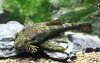 Lasiancistrus
volcanensis Lasiancistrus
volcanensisMale |
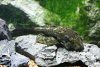 Lasiancistrus
volcanensis Lasiancistrus
volcanensisMale |
If you would like to contribute to the monthly factsheets with an article, information or photos, please e-mail me. You will of course be credited for your work.

If you would like to donate any denomination of monies to the site just click the above link button. All proceeds will go to running the site and hopefully to keep it going for a few years yet.

