SCOTCAT.COM
your internet guide to all things catfish
Loricaria birindellii Thomas & Sabaj , 2010 |
Image contributors to this species: |
ScotCat Sources: |
|

Other Sources: |
|
|


Relevant Information: |
Description: In adults Loricaria birindellii is distinguished from all other nominal species of Loricaria by having a combination of an elongate dorsal-fin spine (36.0% SL based on the holotype vs. 16–29%, usually less than 26% SL) that is supported throughout most of its length by the first branched ray and an inconspicuous (vs. prominent) post-orbital notch with minimum orbital diameter 95.4–97.2% (vs. 71.8–91.5%) of maximum orbital diameter. It is further distinguished from similar and geographically proximate species, L. lata and L. simillima, by having a narrower head width (13.9–14.9% SL vs. 15.2–19.4% SL in L. simillima and 16.4–20.1% SL in L. lata), from L. clavipinna by having more divergent plates (21 vs. 18–19) and fewer coalesced plates (13 vs. 15–16) in the lateral series, and from L. cataphractta by having weakly (vs. strongly) developed odontode crests on head and dorsal trunk plates, more divergent plates (21 vs. 17–20, usually 19) and fewer coalesced plates (13 vs. 13–17, usually 15–16) in the lateral series. Etymology: The specific name birindellii: In honour of Brazilian ichthyologist José Luís O. Birindelli (b. 1979), Universidade de São Paulo, who helped collect type material and “deftly commanded” the 2007 Pipe Expedition to Serra do Cachimbo, Brazil, leading to the discovery of this and many other undescribed fishes. Remarks: The authors (Thomas, M.R. and M.H. Sabaj Pérez 2010) caught this new species downstream of a cataract in clear water approximately one to two metres deep and with a moderate current. The substrate was predominantly sand with patches of bedrock and large lateritic boulders. |
Common Name: |
Synonyms: |
None |
Family: |
Loricariidae |
Distribution: |
Brazil: Pará, Altamira Municipality, Rio Curuá, Iriri-Xingu drainage, near town of Castelo dos Sonhos. |
Size: |
24.0cm. (9¾ins) |
Temp: |
24-28°c (75-83°f) |
p.H. |
|
6.0-7.0. |
IUCN Red List |
Loricaria birindellii is endemic to Brazil, specifically the Xingu River basin in the state of Pará, occurring in rapids with rocky and pebble bottoms. Although the construction of the Belo Monte hydroelectric dam altered part of its natural environment, a possible population decline is suspected not to represent a threat to the species due to its wide distribution in the basin. For this reason, Loricaria birindellii has been categorised as Least Concern (IUCN 2022). |
Reference: |
Chico Mendes Institute
for Biodiversity Conservation (ICMBio). 2022.
Loricaria birindellii. The IUCN Red List
of Threatened Species 2022. |

Family: Loricariidae Back to Ident-A-Cat Click on Thumbnails |
 Loricaria
birindellii Loricaria
birindellii |
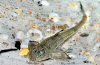 Loricaria
birindellii Loricaria
birindellii |
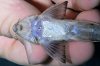 Loricaria
birindellii Loricaria
birindelliiVentral view of mouth |
If you would like to contribute to the monthly factsheets with an article, information or photos, please e-mail me. You will of course be credited for your work.

If you would like to donate any denomination of monies to the site just click the above link button. All proceeds will go to running the site and hopefully to keep it going for a few years yet.

