SCOTCAT.COM
your internet guide to all things catfish
Paracanthopoma daemon de Pinna & Dagosta, 2022 |
Image contributors to this species: |
ScotCat Sources: |
|
|

Other Sources: |
|


Relevant Information: |
Paracanthopoma daemon seems to be a small inhabitant of psammic environments. One of the collectors of the type series (C. Moreira) informs that the specimens were captured during daytime at a river sector with mild current, in a small fine-sand bank close to the margin of the river, surrounded by fields of mud on one side and coarse gravel on the other. It occurred syntopically with Mastiglanis asopos (Heptapteridae). Other vandelliines caught in the same site, but on muddy substrate, included two undescribed species of Vandellia (de Pinna, M. C. C., & Dagosta, F. C. P. 2022). Habitat: Paracanthopoma daemon is known to occur in a single locality in the Rio Coronel Vanick, tributary to the upper rio Xingu in central Brazil (de Pinna, M. C. C., & Dagosta, F. C. P. 2022). Aquarium Care: Not easy to keep and would need to be housed on their own as larger fish would be preyed upon for their blood in the gill chambers. Sand is the best substrate for digging themselves into and floating plants to cut the light down for this light sensitive species. Diet: Very difficult as all reports seem to intimate that they need larger fish to feed on. Etymology: The genus name Paracanthopoma: pará (Gr.), near, referring to similarity to Acanthopoma (Stegophilinae), both of which possess united gill membranes that are free from the isthmus. The specific name daemon: Daemon is a latinised form of the Greek daimon, referring to the supernatural entities hierarchically between gods and mortals, including inferior divinities and ghosts of some dead men. The word was incorporated into the Judean-Christian tradition by its usage in Greek translations of sacred texts. |
Common Name: |
None |
Synonyms: |
None |
Family: |
Trichomycteridae |
Distribution: |
South America: Upper Rio Xingu drainage, Mato Grosso, Brazil. Type locality: Brazil, Mato Grosso, Gaúcha do Norte, Rio Coronel Vanick. |
Size: |
2.0cm (¾ins) |
Temp: |
23-26°c (73-79°f.) |
p.H. |
|
6.0-7.0. |
IUCN Red List |
Not evaluated |
Reference: |
de Pinna, M. C. C.,
& Dagosta, F. C. P. (2022). A taxonomic
review of the vampire catfish genus Paracanthopoma
Giltay, 1935 (Siluriformes, Trichomycteridae), with
descriptions of nine new species and a revised diagnosis
of the genus. Papéis Avulsos De Zoologia, 62,
e202262072. |

Family: Trichomycteridae Back to Ident-A-Cat Click on Thumbnails |
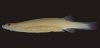 Paracanthopoma
daemon Paracanthopoma
daemonHolotype-Brazil, Mato Grosso, Gaúcha do Norte, Rio Coronel Vanick |
If you would like to contribute to the monthly factsheets with an article, information or photos, please e-mail me. You will of course be credited for your work.

If you would like to donate any denomination of monies to the site just click the above link button. All proceeds will go to running the site and hopefully to keep it going for a few years yet.

