SCOTCAT.COM
your internet guide to all things catfish
Tenellus cristinae (Sabaj Pérez, Arce, Sousa & Birindelli, 2014) |
Image contributors to this species: |
Yann Fulliquet (4) Ian Fuller (1) GREEN FISH Aquarium (1) |
ScotCat Sources: |
|
|

Other Sources: |
|


Relevant Information: |
Tenellus is a new genus, described by Birindelli (2014) to include, Nemadoras trimaculatus, N. leporhinus, N. ternetzi and the new species N. cristinae all of course now in the Tenellus genera.The snout is constricted, narrowly compressed (gape very small); dorsal profile concave between tip of snout and posterior nares. Abstract: Tenellus cristinae is described from the upper Amazonas/Solimões and Madeira basins in Brazil, Colombia and Peru, with additional specimens from the upper Meta (Orinoco basin), Colombia, tentatively treated as conspecific. Tenellus cristinae is distinguished from congeners by having 3–9 premaxillary teeth in approximately two rows in juveniles and adults, outermost teeth weakly spatulate and innermost more acicular (vs. premaxillary edentulous in adults of all congeners and limited to 1–6 acicular teeth in juveniles of N. elongatus, N. humeralis, T. leporhinus and T. ternetzi); and mental barbels with extremely elongate (filiform) papillae, length of longest papillae about 4–7 times its width at base (vs. papillae shorter, length of longest <3 times its width at base). Tennelus cristinae most closely resembles T. leporhinus, but is further distinguished from that species by having shaft and primary fimbriae of maxillary barbel smooth (vs. outer margin of shaft and margins of primary fimbriae with distinct secondary fimbriae). Nuptial specimens of T. cristinae exhibit sexual dimorphism; in males the pungent dorsal spine is greatly prolonged by a soft, flexible tip approximately 19.8–23.9% of the total dorsal spine length (vs. 5.3–9.4% in females). The sturdy, spatulate teeth in the upper and lower jaws of T. cristinae are evidently effective tools for raking caddisfly larvae from their attached substrates, as gut contents were dominated by cases and larval remnants of Nectopsyche (Leptoceridae). Aquarium Care: Best kept in groups in a large aquarium as they will not do well singularly. Avoid boisterous or aggressive tankmates as this is a shy species that will hide out during the day and appear for food at night under darkness. Provide a dimly lit tank with floating plants. Diet: Tubifex, Daphnia, Cyclops. Once settled in they will take frozen foods, flake and tablet foods. Etymology: Tenellus comes from the Latin tener, meaning delicate, in reference to the delicate appearance of those dorads. cristinae is named after the main author's wife, Cristina Sabaj Perez. Remarks: In some online publications the synonym of Nemadoras cristinae is still being used for this species. |
Common Name: |
None |
Synonyms: |
Nemadoras cristinae |
Family: |
Doradidae |
Distribution: |
South America: Amazonas/Solimões and Madeira basins in Brazil, Colombia and Peru. |
Size: |
12.5cm. (5ins) |
Temp: |
22-25°C (72-77°F) |
p.H. |
|
6.5-7.0. |
Reference: |
Birindelli, J. L. O.
2014 (16 Sept.) Phylogenetic relationships of the
South American Doradoidea (Ostariophysi: Siluriformes).
Neotropical Ichthyology v. 12 (no. 3): 451-563 [1-102]. |

Family: Doradidae Back to Ident-A-Cat Click on Thumbnails |
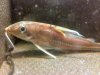 Tenellus cristinae
 |
 Tenellus
cristinae Tenellus
cristinae |
 Tenellus
cristinae Tenellus
cristinae |
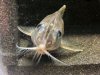 Tenellus
cristinae Tenellus
cristinaeHead view |
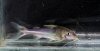 Tenellus
cristinae Tenellus
cristinae |
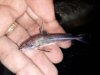 Tenellus
cristinae Tenellus
cristinae |
If you would like to contribute to the monthly
factsheets with an article, information or photos, please e-mail
me. You will of course be credited for your work.

If you would like to donate any denomination of monies to the site just click the above link button. All proceeds will go to running the site and hopefully to keep it going for a few years yet.

