SCOTCAT.COM
your internet guide to all things catfish
Brachyrhamdia rambarrani (Axelrod & Burgess, 1987) |
Image contributors to this species: |
Allan James (1) Johnny Jensen's Photographic Library (3) David Sands (1) |
ScotCat Sources: |
|


Other Sources: |
|


Relevant Information: |
The common name of 'False Adolfoi' is due to its habit of schooling with this species of Corydoras (Hoplisoma "Corydoras" adolfoi) species. This habit probably stems from the protection of this scaleless catfish from large predators due to the plated Corydoras where predators are wary of the locked pectoral and dorsal spines. There is the other scenario that states that the Brachyrhamdia are practising a Batesian form of shoaling wheras they take food that the Corydoras dig up from the substrate and also they stael the eggs of these species. They seem to do better with Corydoras that possess a black eye stripe and the orange head blotch such as H. davidsandsi, H. adolfoi, H. melini and other species from the upper Rio Negro rather than plain species such as Osteogaster (Corydoras) aenea which tend to be nipped and driven out of the shoal. Reported to be a bit more harder to keep than the other Brachyrhamdia such as B. imitator and B. marthae so a good aquarium husbandry is a must. Aquarium Care: House in aquaria (24ins/60cm or over) with alternate sand and gravel substrate. Provide planted area. Keep in a species tank or with Corydoras and larger Characins or Anabantoides in the top half as they can be predatory with small species such as Neon Tetras. Diet: Tablet and pellet foods. Frozen and live foods such as bloodworm. Insect larvae. Not a fussy eater. Etymology: The specific name rambarrani: In honour of Harry Rambarran (1935–2022), then co-manager of International Fisheries, Inc. (Hialeah, Florida, USA), an aquarium-fish exporter that supplied holotype. Remarks: Not often seen in imports. |
Common Name: |
Synonyms: |
Pimelodella rambarrani |
Family: |
Heptapteridae |
Distribution: |
South America: Unini River basin in upper Negro River drainage, Brazil. Type locality: Reportedly from the Rio Unini, a tributary of the Rio Negro, Amazonas, Brazil. |
Size: |
7.0cm. (2¾ins) |
Temp: |
24-26°C (75-79°F) |
p.H. |
|
6.5-7.2. |
IUCN Red List |
Brachyrhamdia rambarrani is endemic to Brazil, described from the Unini River, and also occurs below the municipality of São Gabriel da Cachoeira, both in the Negro River basin, Amazonas, Brazil. It is known from few specimens in scientific collections, three of which belong to the type series and six from additional material. The lack of further information about its population is possibly due to the limited sampling effort in the area, which is difficult to access. Despite being used for ornamental purposes, no significant threats that endanger its population have been identified. Therefore, Brachyrhamdia rambarrani is categorised as Least Concern (LC), (IUCN 2022). |
Reference: |
Baensch, H.A. and R.
Riehl 1985 Aquarien
atlas. Band 2. Mergus, Verlag für Natur- und
Heimtierkunde GmbH, Melle, Germany. 1216 p. |

Family: Heptapteridae Back to Ident-A-Cat Click on Thumbnails |
 Brachyrhamdia rambarrani
 |
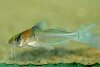 Brachyrhamdia
rambarrani Brachyrhamdia
rambarrani |
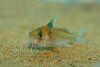 Brachyrhamdia
rambarrani Brachyrhamdia
rambarrani Head view |
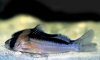 Brachyrhamdia
rambarrani Brachyrhamdia
rambarrani |
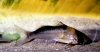 Brachyrhamdia
rambarrani Brachyrhamdia
rambarrani |
If you would like to contribute to the monthly factsheets with an article, information or photos, please e-mail me. You will of course be credited for your work.

If you would like to donate any denomination of monies to the site just click the above link button. All proceeds will go to running the site and hopefully to keep it going for a few years yet.

