SCOTCAT.COM
your internet guide to all things catfish
Mystus multiradiatus Roberts, 1992 |
Image contributors to this species: |
Kamphol Udomrittiruj (1) Johnny Jensen's Photographic Library (3) |
ScotCat Sources: |
|


Other Sources: |
|
|


Relevant Information: |
|
Description: The small gap between supra-occipital process and basal bones of dorsal fin spine help visually differentiate this species from the similar M. atrifasciatus. It is also distinguished from the similar M. bleekeri by the much less conspicuous and non-indented fontanel, and the lack of dark tympanic spot. (Grant 2009). Habitat: Adults inhabit rivers and streams. Often occur in mixed schools with M. mysticetus which congregate around tree limbs and other solid objects, browsing the hard surfaces for zooplankton, crustaceans, aquatic insects and some plant debris. Move into the flooded forest during the flood season. Reproduction: Oviparous, distinct pairing possibly like other members of the same family. Etymology: The genus name Mystus: "Mystax" meaning whiskered (hair on the upper lip) Mystus was first used by Belon in 1553 to describe all fish with whiskers. The specific name multiradiatus: multi-, many; radiatus, rayed, referring to >40 gill rakers on first gill arch, more than any congener known at the time except M. mysticetus. |
Common Name: |
None |
Synonyms: |
None |
Family: |
Bagridae |
Distribution: |
Asia: Mekong, Chao Phraya and perhaps Mekong basins. |
Size: |
13.0cm (5ins) |
Temp: |
22-27°C (71-81°F) |
p.H. |
|
6.0-7.0. |
Reference: |
Froese, R. and D. Pauly.
Editors. 2017. FishBase. World Wide Web electronic
publication. www.fishbase.org, ( 02/2017 ). |

Family: Bagridae Back to Ident-A-Cat Click on Thumbnails |
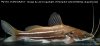 Mystus
multiradiatus Mystus
multiradiatus |
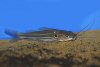 Mystus
multiradiatus Mystus
multiradiatus |
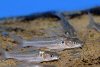 Mystus
multiradiatus Mystus
multiradiatus |
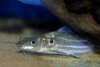 Mystus
multiradiatus Mystus
multiradiatusHead view |
If you would like to contribute to the monthly factsheets with an article, information or photos, please e-mail me. You will of course be credited for your work.

If you would like to donate any denomination of monies to the site just click the above link button. All proceeds will go to running the site and hopefully to keep it going for a few years yet.

