SCOTCAT.COM
your internet guide to all things catfish
Noturus gyrinus (Mitchill, 1817) |
Image contributors to this species: |
Konrad P. Schmidt (1) R. D. Bartlett (1) Allan James (1) Birger Kamprath (3) |
ScotCat Sources: |
|
|


Other Sources: |
|


Relevant Information: |
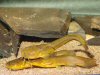
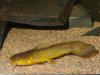
Habitat: Inhabits lakes, rock-, mud-bottomed or detritus-bottomed pools and backwaters of lowland creeks and small to large rivers. Feeds on midge, isopods, amphipods, mayfly and caddis larvae. The "Tadpole Madtom" is one of the smallest Madtoms apart from the rarest; Noturus stanauli, is abundant in strong riffles of large creeks and rivers, especially in areas having boulders or large flat rocks. It is one of the most widespread species in the genus and can be found from South West Quebec and South East Manitoba in Canada down to Southern Florida and Texas. It is absent in the Appalachian Mountains. Aquarium Care: In common with most of this genus they make good inhabitants of a cold (cool) water aquarium and can be mixed with other cool water species such as shiners, minnows and darters. They like to have place to call home in the aquarium so furnish it with rocks or driftwood and flat stones so they can hide during the day. You can have either sand or a mixed fine gravel and an internal power filter to gently push the water around the tank, this will imitate the conditions encountered in the wild for this species. Diet: They like most meaty food, such as cut-up earth worms, frozen blood worm and prawns. They will also take tablet and pellet foods. A varied diet will keep them in optimum health. Etymology: The specific name gyrinus: (jie-wren´-us) means tadpole, referring to its tadpole-like shape. |
Common Name: |
Tadpole madtom |
Synonyms: |
Silurus gyrinus |
Family: |
Ictaluridae |
Distribution: |
North America: Atlantic draining Rivers, below Fall line; Mississippi River basin; rivers draining Gulf of Mexico (north of Rio Grande); and Great Lakes; introduced into many additional rivers. Type locality: Wallkill, New York. |
Size: |
11.5cm. (4½ins) |
Temp: |
05-23°C (37-73°F) |
p.H. |
|
6.5-7.0. |
IUCN Red List |
Listed as Least Concern in view of the large extent of occurrence, large number of subpopulations, large population size, and lack of major threats. Trend over the past 10 years or three generations is uncertain but likely relatively stable, or the species may be declining but not fast enough to qualify for any of the threatened categories under Criterion A (reduction in population size), (needs updating IUCN 2013). |
Reference: |
Ferraris, C.J. Jr.,
2007. Checklist of catfishes, recent and fossil (Osteichthyes:
Siluriformes), and catalogue of siluriform primary
types. Zootaxa 1418:1-628. |

Family: Ictaluridae Back to Ident-A-Cat Click on Thumbnails |
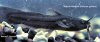 Noturus gyrinus
 |
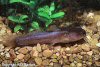 Noturus
gyrinus Noturus
gyrinus |
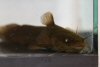 Noturus
gyrinus Noturus
gyrinusHead view |
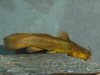 Noturus
gyrinus Noturus
gyrinus |
 Noturus
gyrinus Noturus
gyrinus |
 Noturus
gyrinus Noturus
gyrinus |
If you would like to contribute to the monthly factsheets with an
article, information or photos, please e-mail
me. You will of course be credited for your work.

If you would like to donate any denomination of monies to the site just click the above link button. All proceeds will go to running the site and hopefully to keep it going for a few years yet.

