SCOTCAT.COM
your internet guide to all things catfish
Panaque nigrolineatus laurafabianae Ortega-Lara & Lujan, 2020 |
Image contributors to this species: |
clunk (2) Allan James (2) Mark Henry Sabaj (1) Nathan Lujan (1) Jorge Garcia (1) |
ScotCat Sources: |
|

Other Sources: |
|
|

Relevant Information: |
Description: The differences between the Panaqolus and the Panaque genera is that the latter has an oval shaped mouth and the jaws have very large spatulate teeth with a single cusp, arranged in a v form and Panaqolus have a small number of spatulate teeth and are also a smaller genus. Abstract: The suckermouth armored catfish genus Panaque contains seven valid species, including the Royal Pleco, Panaque nigrolineatus, which has long been popular as an ornamental aquarium fish and was originally described from the Apure River basin in Venezuela. We examine a phenotypically distinct population of P. nigrolineatus from the Guaviare River in southern Colombia at the southwesternmost corner of the Orinoco River basin. In contrast to typically boldly striped populations from closer to the type locality of P. nigrolineatus, the Guaviare River basin population is usually boldly spotted, earning them the common name Watermelon Pleco in the aquarium fish trade. Because of the commercial popularity of this distinctive colour morph, it is heavily exploited for export to the global ornamental fish trade. We find that the Guaviare River P. nigrolineatus laurafabianae is not only distinct geographically and in colour pattern, but is also morphometrically diagnosable from P. nigrolineatus individuals from outside the Guaviare River basin. However, relatively subtle phenotypic differences, invariance in nuclear DNA markers, < 0.5% divergence in mitochondrial DNA markers 16S, cytb, and ND2, and the non-monophyly of Guaviare River populations prevent us from robustly inferring species-level distinctiveness of the Watermelon Pleco. We therefore propose to recognise this population as a distinct subspecies (Ortega-Lara & Lujan, 2020). Aquarium Care: This species is a bit robust in an aquarium set-up so would need plenty of hiding places, plenty of water changes, due to their wood eating habits, and powerfull filtration. Needs a spacious aquarium of at least 180cm (6ft.) for a single individual. Diet: All Panaques and also the Panaqolus genera are wood eaters so would need this in an aquarium set-up. Feed also vegetable foods such as cucumber, courgette (zucchini) and sinking tablets. Etymology: The specific name is to honour the co-author, Armando Ortega-Lara’s daughter, Laura Fabiana. Remarks: This species is part of the nigrolineatus group which includes P. nigrolineatus, (L190), P. armbrusteri (L027), P. bathyphilus (L090), L191, P. schaeferi (L203), and this species Panaque nigrolineatus laurafabianae (L330) which was described by Ortega-Lara & Lujan, 2020. |
Common Name: |
L330, L027a, Watermelon Pleco |
Synonyms: |
None |
Family: |
Loricariidae |
Distribution: |
South America: Río Guejar, Río Guaviare-Einzug (Guaviare, Meta) Colombia. |
Size: |
40.0cm. (16ins) |
Temp: |
24-29°c (75-85°f) |
p.H. |
|
6.0-7.5. |
Reference: |
|
Ortega-Lara, A. &
Lujan, NK, 2020 "Panaque nigrolineatus
laurafabianae, a new, commercially exploited subspecies
of ornamental wood-eating pleco (Loricariidae: Hypostominae)
from the Guaviare River basin in Colombia" (Zootaxa,
Vol. 4732 No. 3). |

Family: Loricariidae Back to Ident-A-Cat Click on Thumbnails |
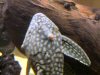 Panaque
nigrolineatus laurafabianae Panaque
nigrolineatus laurafabianae |
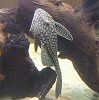 Panaque
nigrolineatus laurafabianae Panaque
nigrolineatus laurafabianae |
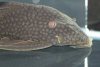 Panaque
nigrolineatus laurafabianae Panaque
nigrolineatus laurafabianaeHead view |
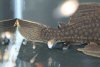 Panaque
nigrolineatus laurafabianae Panaque
nigrolineatus laurafabianaeCaudal view |
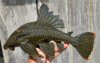 Panaque
nigrolineatus laurafabianae Panaque
nigrolineatus laurafabianaeCollected near the mouth of caño San Jose, left bank trib río Duda (Guayuabero–Guaviare–Orinoco Dr.) |
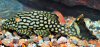 Panaque
nigrolineatus laurafabianae Panaque
nigrolineatus laurafabianae |
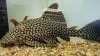 Panaque
nigrolineatus laurafabianae Panaque
nigrolineatus laurafabianae |
If you would like to contribute to the monthly factsheets with an article, information or photos, please e-mail me. You will of course be credited for your work.

If you would like to donate any denomination of monies to the site just click the above link button. All proceeds will go to running the site and hopefully to keep it going for a few years yet.

