SCOTCAT.COM
your internet guide to all things catfish
Ompok bimaculatus (Bloch, 1794) |
Image contributors to this species: |
Jean-Francois Helias (1) Beta Mahatvaraj (3) Andrew Rao (1) Mahbubur Rahman Sampod (1) |
ScotCat Sources: |
|
|


Other Sources: |
|


Relevant Information: |
The species of Ompok have been grouped into species groups, such as the Ompok bimaculatus group (O. bimaculatus, O. malabaricus, O. miostomus, O. siluroides), the O. eugeneiatus group (O. eugeneiatus, O. pinnatus), the O. hypophthalmus group (O. hypopthalmus, O. rhabdinurus, O. urbaini), and the O. leiacanthus group (O. fumidus, O. jaynei, O. leiacanthus). On the other hand, the monophyly of these species groups is not strong enough to reassign species to other genera. The O. eugeneiatus group is likely to be more closely related to Kryptopterus than the other Ompok species. According to the recent catfish checklist, O.eugeneiatus has been reclassified into Kryptopterus, however O. pinnatus has not. Description: The catfish genus Ompok La Cepède, 1803, consists of medium-sized silurid fishes found in inland waters throughout South and Southeast Asia. The genus is traditionally diagnosed by the presence of a short dorsal fin with 4 rays, strongly forked caudal fin, subcutaneous eye that is set immediately posterior to the mouth rictus and two patches of palatal teeth (Weber & de Beaufort, 1913). Bornbusch (1995) showed that Ompok, as currently understood, is probably paraphyletic. However, given the weak support for the monophyly of his clades and the difficulty in identifying synapomorphies to easily diagnose genera, there has been little change in the taxonomy of this group. The genus is recognised to be paraphyletic. Dorsal soft rays (total): 4 - 4; Anal soft rays: 54 – 74. Two pairs of barbels; maxillary barbels reaching pelvic fins or anal fins; mandibulary barbels minute, about as long as diameter of eye. Eyes small, covered by skin. Dorsal and pelvic fins small; anal fin long; pectoral fins well developed; vomerine teeth in 2 patches. Habitat: Occurs in streams and rivers of all sizes with currents ranging from sluggish to moderate. Found in quiet, shallow (0.5-1.5 m), often muddy water, in sandy streams, rivers and tanks. Also occurs in canals, beels and inundated fields. Moves into freshly inundated habitats during the flood season. Diet: Feeds on vegetable matter, fish, crustaceans and mollusks. Etymology: The specific name bimaculatus: bi-, two; maculatus, spotted, presumably referring to the blackish blotch above pectoral fin and spot on caudal peduncle (although neither mark is mentioned in description and the latter mark is not shown in illustration). Remarks: The specimens from Malaysia may be another species, namely O.siluroides, which was a synonym of O. bimaculatus but is now a species in its own right. Ompok siluriodes was at one time a synomyn for O. bimaculatus but O. siluriodes has a marbled body pattern against the silver of O. bimaculatus. |
Common Name: |
Synonyms: |
Silurus bimaculatus, Callichrous bimaculatus, Pseudosilurus bimaculatus, Phalacronotus siluroides, Ompok siluroides, Ompok canio, Silurus canio, Schilbe pabo, Silurus chechra, Silurus duda, Callichrus affinis, Callichrus immaculatus, Callichrus nebulosus, Wallago microcephalus, Silurus mysoricus, Silurus indicus, Callichrous gangeticus, Callichrous macrophthalmus, Callichrous sindensis, Wallago miostoma, Ompok sindensis. |
Family: |
Siluridae |
Distribution: |
Asia: Indian subcontinent and Myanmar. |
Size: |
45.0cm. (18ins) |
Temp: |
20-26°C (67-79°F) |
p.H. |
|
6.0-8.0. |
Reference: |
Ng, Heok Hee.,
2008, Ompok supernus, a new catfish (Teleostei: Siluridae)
from Borneo. Zootaxa 1877: 59–68 (2008). |

Family: Siluridae Back to Ident-A-Cat Click on Thumbnails |
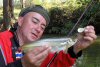 Ompok
bimaculatus Ompok
bimaculatus |
 Ompok
bimaculatus Ompok
bimaculatus |
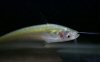 Ompok
bimaculatus Ompok
bimaculatus |
 Ompok
bimaculatus Ompok
bimaculatus |
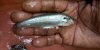 Ompok
bimaculatus Ompok
bimaculatus |
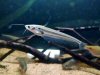 Ompok
bimaculatus Ompok
bimaculatus |
If you would like to contribute to the monthly factsheets with an article, information or photos, please e-mail me. You will of course be credited for your work.

If you would like to donate any denomination of monies to the site just click the above link button. All proceeds will go to running the site and hopefully to keep it going for a few years yet.

